
Views: 0 Author: Site Editor Publish Time: 2026-01-27 Origin: Site
When you drive an automatic car, you likely don't think about the thousands of mechanical decisions happening beneath your feet every second. You simply press the gas pedal, and the car accelerates, shifting gears smoothly as you gain speed. But have you ever wondered what actually tells the transmission when to shift? The answer lies in a complex, maze-like component known as the valve body.
Often called the "brain" of the automatic transmission, the valve body is responsible for directing hydraulic fluid to the right place at the right time. Without it, your vehicle would simply be a heavy metal box with a running engine that goes nowhere. Understanding how this component works can help you identify potential issues before they become expensive repairs and appreciate the precision engineering required to build one.
This guide explores the intricacies of the valve body in a car, dissecting its functions, components, and the advanced casting technologies used to manufacture these critical parts.
The valve body is the control center of an automatic transmission system. While the engine provides the power, the transmission translates that power to the wheels, and the valve body dictates how that translation happens. Physically, it looks like a metal maze, filled with channels, passages, and valves.
In a valve body car setup, specifically one with an automatic transmission, this component acts as a hydraulic computer. Before modern onboard computers took over, the valve body relied entirely on hydraulic pressure to make shifting decisions. In modern vehicles, it works in tandem with the Transmission Control Unit (TCU). The TCU sends electrical signals to solenoids within the valve body, which then open or close to direct hydraulic fluid to specific clutches and bands. This action engages the correct gear for your current speed and driving conditions.
If this component fails or becomes clogged with debris, the transmission cannot change gears, rendering the vehicle undrivable. Because of its complexity and the high pressure it operates under, the manufacturing quality of a valve body is paramount to the vehicle's longevity.
To understand how a gear valve body works, you have to understand the role of hydraulic fluid (often called transmission fluid). This fluid isn't just a lubricant; it is the physical force that moves the internal parts of the transmission.
Here is the step-by-step process of how the valve body regulates shifting:
Pressure Generation: The transmission pump creates hydraulic pressure as the engine spins.
Routing: This pressurized fluid is sent to the valve body.
Decision Making: Based on the position of the throttle (how hard you are pressing the gas) and the vehicle's speed, the valves inside the body open or close.
Actuation: The fluid flows through the open channels to engage specific clutch packs or bands.
Shifting: The engagement of these clutches locks specific planetary gears, effectively changing the gear ratio and allowing the car to speed up or slow down efficiently.
The "gear" aspect refers to the specific gear ratio selected. For instance, when you are stopped, the valve body directs pressure to engage first gear. As you accelerate, pressure builds, and valves shift to cut off fluid to first gear and route it to second gear. This transition must happen in milliseconds to ensure a smooth ride.
A valve body is not a single solid block; it is an assembly of dozens of smaller, precision-engineered components. Each of these hydraulic valve body parts plays a distinct role in managing fluid flow. If even one small spring or valve fails, the entire system can malfunction.
Here is a breakdown of the primary components found inside a standard transmission valve body:
Component Name | Primary Function |
|---|---|
Valve Body Housing | The main metal casing (usually aluminum or steel casting) that contains all the channels and passages for fluid flow. |
Solenoids | Electro-hydraulic switches controlled by the car's computer. They open and close to control the flow of fluid into the valve body channels. |
Spool Valves | Cylindrical valves that slide back and forth to block or open specific passages, directing fluid to the appropriate clutches. |
Separator Plate | A thin metal plate located between the valve body and the transmission case. It acts as a gasket and contains calibrated holes to regulate fluid volume. |
Check Balls | Small spheres that act as one-way valves. They allow fluid to flow in one direction while preventing backflow, ensuring pressure remains stable. |
Return Springs | These springs push the valves back to their neutral position when hydraulic pressure is released. |
The interaction between these parts creates a hydraulic logic system. The solenoids act as the trigger, the spool valves act as the gatekeepers, and the housing provides the roadmap for the fluid.
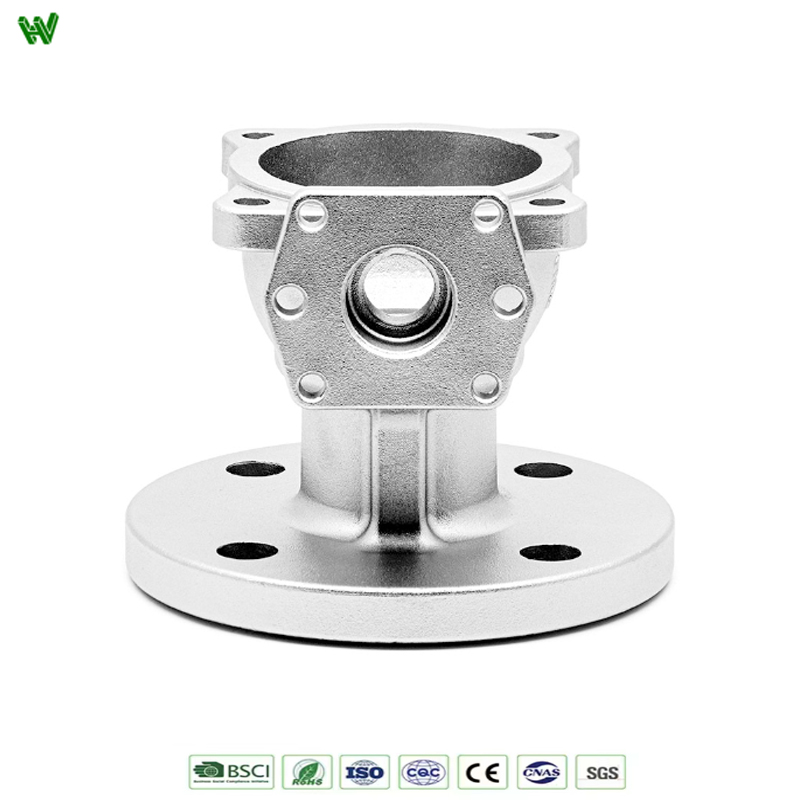
Manufacturing a valve body is an exercise in extreme precision. The internal channels must be perfectly smooth to allow fluid to flow without turbulence, and the exterior must be durable enough to withstand high heat and constant vibration. This is where investment casting—specifically the silica sol process—becomes vital.
Companies like Guangdong Hunter Valley Precision Casting Technology Co., Ltd. specialize in this manufacturing technique. Investment casting (also known as lost-wax casting) allows for the creation of complex geometries that would be impossible or too costly to achieve through machining alone.
The benefits of investment casting for valve bodies include:
Complex Internal Channels: The casting process allows for intricate internal designs that are essential for the hydraulic maze of a valve body.
Surface Finish: The silica sol process provides a superior surface finish, reducing the friction of the hydraulic fluid moving through the body.
Material Versatility: Manufacturers can cast valve bodies in various materials, including stainless steel and carbon steel, to meet specific durability requirements.
Tight Tolerances: Precision casting ensures that the valves and solenoids fit perfectly, preventing fluid leaks that lead to pressure loss.
For industries requiring high-performance pump and valve casting, this method ensures that the final product is robust, efficient, and capable of lasting for the vehicle's lifespan.
Because the valve body is central to the transmission's operation, a failure usually manifests as a distinct driving problem. Recognizing these signs early can save you from a total transmission failure.
Common symptoms include:
Delayed Shifting: You press the gas, the engine revs, but there is a noticeable pause before the gear engages. This suggests fluid is not reaching the clutches fast enough.
Rough or Erratic Shifts: If the car jerks or "slams" into gear, a valve may be sticking, causing a sudden spike in hydraulic pressure.
Gear Slippage: The car may randomly pop out of gear or lose power while driving. This happens when pressure drops, and the valve body cannot hold the clutches closed.
Noises when Shifting: Clunking or banging noises during gear changes (often called "garage shifts" when moving from Park to Drive) are classic signs of valve body wear.
Check Engine Light: Modern cars will detect pressure irregularities and trigger a diagnostic code related to the transmission solenoids or pressure switches.
When a valve body fails, car owners are often faced with a difficult choice: repair the existing unit, buy a remanufactured one, or purchase a brand new OEM (Original Equipment Manufacturer) part. The right choice often depends on the budget and the age of the vehicle.
Option | Pros | Cons |
|---|---|---|
Repair (Kit) | Most affordable option. Good for fixing minor issues like worn springs or gaskets. | Does not address wear on the main housing. High labor costs if a mechanic does it. |
Remanufactured | The housing is re-machined, and worn parts are replaced. Cheaper than new OEM. | Quality varies significantly depending on the supplier. |
New OEM | Guaranteed fit and performance. Highest reliability. | Most expensive option. Can be hard to find for older cars. |
For manufacturers and suppliers, ensuring a steady supply of high-quality casting parts is essential to keeping these replacement options available. High-quality casting ensures that even aftermarket or replacement valve bodies meet the rigorous standards required for modern vehicles.
The valve body is robust, but it is not invincible. The number one enemy of hydraulic valve body parts is contaminated fluid. Over time, the transmission fluid breaks down and loses its viscosity. Worse, tiny metal shavings from the gears and clutch material can contaminate the fluid.
When this dirty fluid flows through the valve body, the debris acts like sandpaper. It can scour the precision-machined bores where the valves slide. Eventually, this wear creates gaps where fluid can leak past the valves, leading to a loss of pressure. Furthermore, sludge can cause the valves to stick, leading to the erratic shifting mentioned earlier.
To protect your valve body:
Fluid Changes: Follow the manufacturer's recommended interval for transmission fluid changes (usually every 30,000 to 60,000 miles).
Filter Replacement: Always change the transmission filter when changing the fluid to capture debris.
Heat Management: Transmission fluid breaks down faster in high heat. If you tow heavy loads, consider adding an external transmission cooler.
The valve body is an unsung hero of automotive engineering. It transforms simple hydraulic pressure into the complex logic required to drive a car. Whether you are a mechanic diagnosing a transmission issue or a manufacturer looking for reliable parts, understanding the quality of the casting is essential.
For those in the automotive supply chain, sourcing from a reputable casting foundry is the first step in ensuring vehicle reliability. Guangdong Hunter Valley Precision Casting Technology Co., Ltd. provides world-class investment casting services for pump and valve components. With expertise in auto parts, marine hardware, and mechanical parts, they deliver the precision required for critical systems like the valve body.
If you are looking for high-quality customized casting solutions, contact Hunter Valley to discuss your specific requirements and ensure your machinery runs smoothly.


