
Views: 0 Author: Site Editor Publish Time: 2025-12-17 Origin: Site
The valve body is the most critical component of any valve assembly. Serving as the primary pressure boundary, it houses the internal trim and allows for the passage of fluid. Because valve bodies must withstand varying temperatures, pressures, and corrosive environments, the method used to manufacture them is just as important as the design itself.
Valve body casting is the primary manufacturing process for creating these complex shapes. Unlike forging, which shapes metal using compressive forces, casting involves pouring molten metal into a mold to achieve the desired geometry. This allows for intricate internal flow paths that would be difficult or impossible to machine from a solid block.
However, not all castings are created equal. Engineers and procurement specialists must understand the differences between casting methods to ensure the final product meets the necessary safety and performance standards. This guide explores the most common types of casting used in valve manufacturing and how to distinguish between them.
At its core, the casting process involves creating a hollow mold that represents the negative space of the desired part. Molten metal—such as carbon steel, stainless steel, or exotic alloys—is poured into this mold. Once the metal cools and solidifies, the mold is broken away or opened to reveal the valve body.
While the concept sounds simple, the execution varies significantly depending on the required surface finish, dimensional accuracy, and production volume. The choice of casting method dictates the valve's structural integrity and its suitability for specific industrial applications, from water treatment to high-pressure oil and gas pipelines.
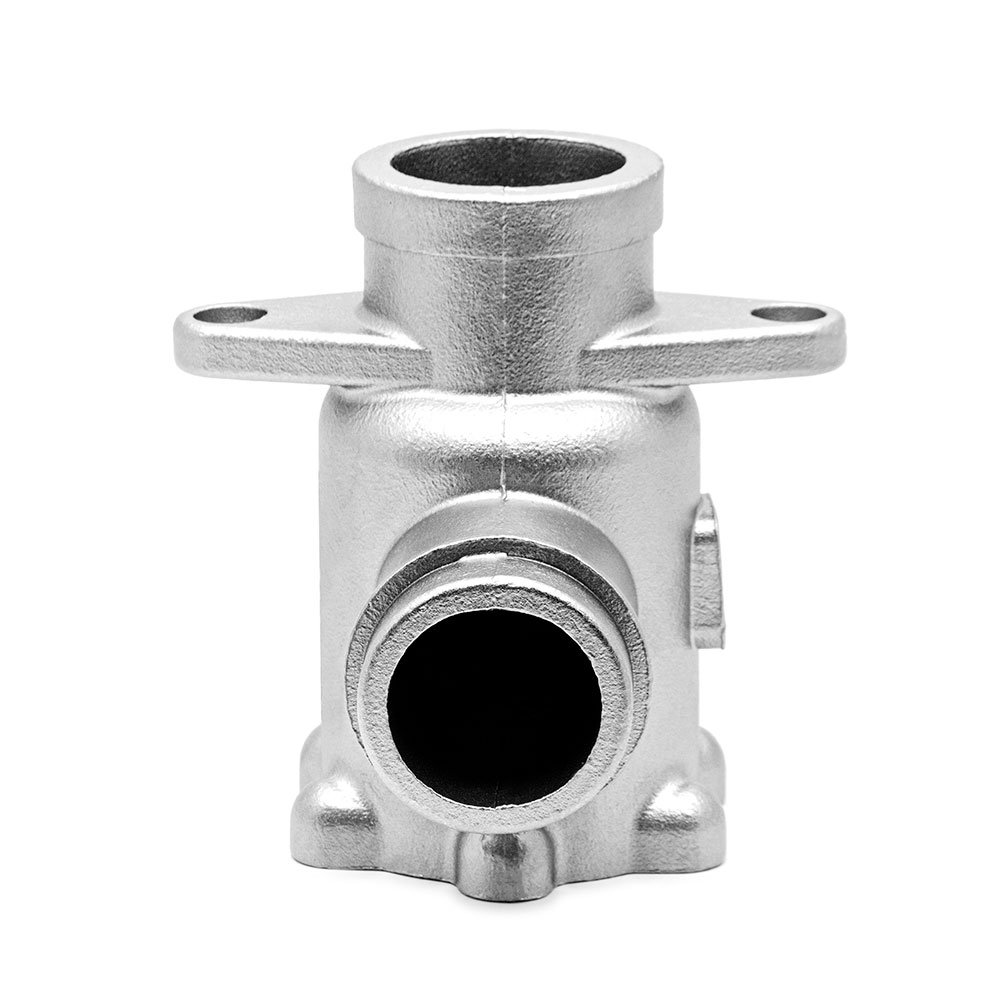
There are three dominant techniques used in the industry today: sand casting, investment casting, and die casting. Each has distinct advantages and limitations.
Sand casting is one of the oldest and most versatile metal forming processes. In this method, the mold is created by packing sand around a pattern of the valve body.
How it works: A mixture of sand and a bonding agent (like clay or resin) is packed around a pattern. The pattern is removed, leaving a cavity. Molten metal is poured in, and once solidified, the sand is broken away.
Best for: Large valve bodies (such as large butterfly or gate valves) and low-to-medium production volumes. It allows for the casting of virtually any alloy.
Drawbacks: The surface finish is generally rough and granular. It typically requires significant machining to achieve tight tolerances.
Investment casting is the preferred method for high-precision pump and valve casting. It is renowned for creating parts with complex geometries and smooth surfaces.
How it works: A wax pattern of the valve body is created and coated in a ceramic slurry. Once the ceramic hardens, the wax is melted out (hence "lost wax"), leaving a perfect mold. Molten metal is then poured into the ceramic shell.
Best for: Small to medium-sized valves (like ball valves or check valves) requiring high dimensional accuracy. It is ideal for stainless steel and other high-melting-point alloys.
Drawbacks: The process is more labor-intensive and expensive per unit than sand casting, but it reduces the need for secondary machining.
Die casting utilizes a permanent metal mold (the die) rather than a temporary sand or ceramic mold.
How it works: Molten metal is forced into a steel mold under high pressure.
Best for: High-volume production of smaller valves made from non-ferrous metals like aluminum, zinc, or copper alloys.
Drawbacks: It is rarely used for steel or iron valves due to the high melting temperatures of those metals, which would damage the steel die. It is less suitable for high-structural-strength applications compared to investment casting.
To help understand the trade-offs between these manufacturing techniques, refer to the comparison table below.
Feature | Sand Casting | Investment Casting | Die Casting |
|---|---|---|---|
Surface Finish | Rough, granular | Excellent, smooth | Excellent, very smooth |
Dimensional Accuracy | Low to Medium | Very High | Very High |
Material Versatility | High (All metals) | High (Steel, Alloys) | Low (Non-ferrous mostly) |
Tooling Cost | Low | Medium | High |
Unit Cost | Low | Medium/High | Low (at high volume) |
Typical Valve Size | Medium to Very Large | Small to Medium | Small |
For demanding industries such as petrochemical, pharmaceutical, and food processing, investment casting is often the superior choice. The primary reason is the integrity of the valve body casting.
Investment casting produces a "near-net shape." This means the cast part is very close to the final dimensions required by the design. Because the ceramic mold creates a smooth finish, there are fewer surface imperfections where corrosion could initiate. Furthermore, the process allows for thinner walls and lighter weights without sacrificing strength, which is vital for optimizing flow efficiency in modern piping systems.
Manufacturers like Hunter Valley Precision Casting utilize this method to produce hydraulic valve body parts and transmission valve bodies that require strict adherence to tolerance specifications.
The material selected for casting must match the fluid being controlled. The most common materials include:
Carbon Steel (WCB): The standard for high-pressure and high-temperature applications. It is durable and cost-effective but prone to corrosion if not treated.
Stainless Steel (CF8/CF8M): Essential for corrosive environments. Stainless steel valve bodies are standard in chemical processing and food industries to prevent contamination.
Alloy Steels: For extreme conditions, such as cryogenic temperatures or highly abrasive fluids, specialized alloys like Monel, Inconel, or Hastelloy are cast.
Duplex Stainless Steel: Offers a combination of high strength and excellent corrosion resistance, often used in desalination and offshore oil applications.
Quality control is the final, critical step in the casting process. A valve body might look perfect on the outside but contain internal voids or cracks that could lead to catastrophic failure under pressure.
Reputable manufacturers employ several testing methods:
Visual Inspection: Checking for surface irregularities, pits, or sand inclusions.
Pressure Testing: The valve body is subjected to pressures higher than its rated capacity to ensure no leaks occur.
Non-Destructive Testing (NDT): Techniques such as X-ray (radiography) or ultrasonic testing are used to "see" inside the metal walls. This detects internal shrinkage or porosity without damaging the part.
Choosing the right type of valve body casting is a balancing act between cost, precision, and application requirements. While sand casting remains a staple for heavy-duty, large-scale hardware, investment casting has become the gold standard for precision components that require high reliability and minimal machining.
For buyers and engineers, understanding these differences ensures that the valves specified for a project will perform safely and efficiently throughout their service life. Whether you require a stainless steel pump body or a specialized transmission valve, verifying the casting method and quality assurance protocols of your supplier is the first step toward a leak-free system.


